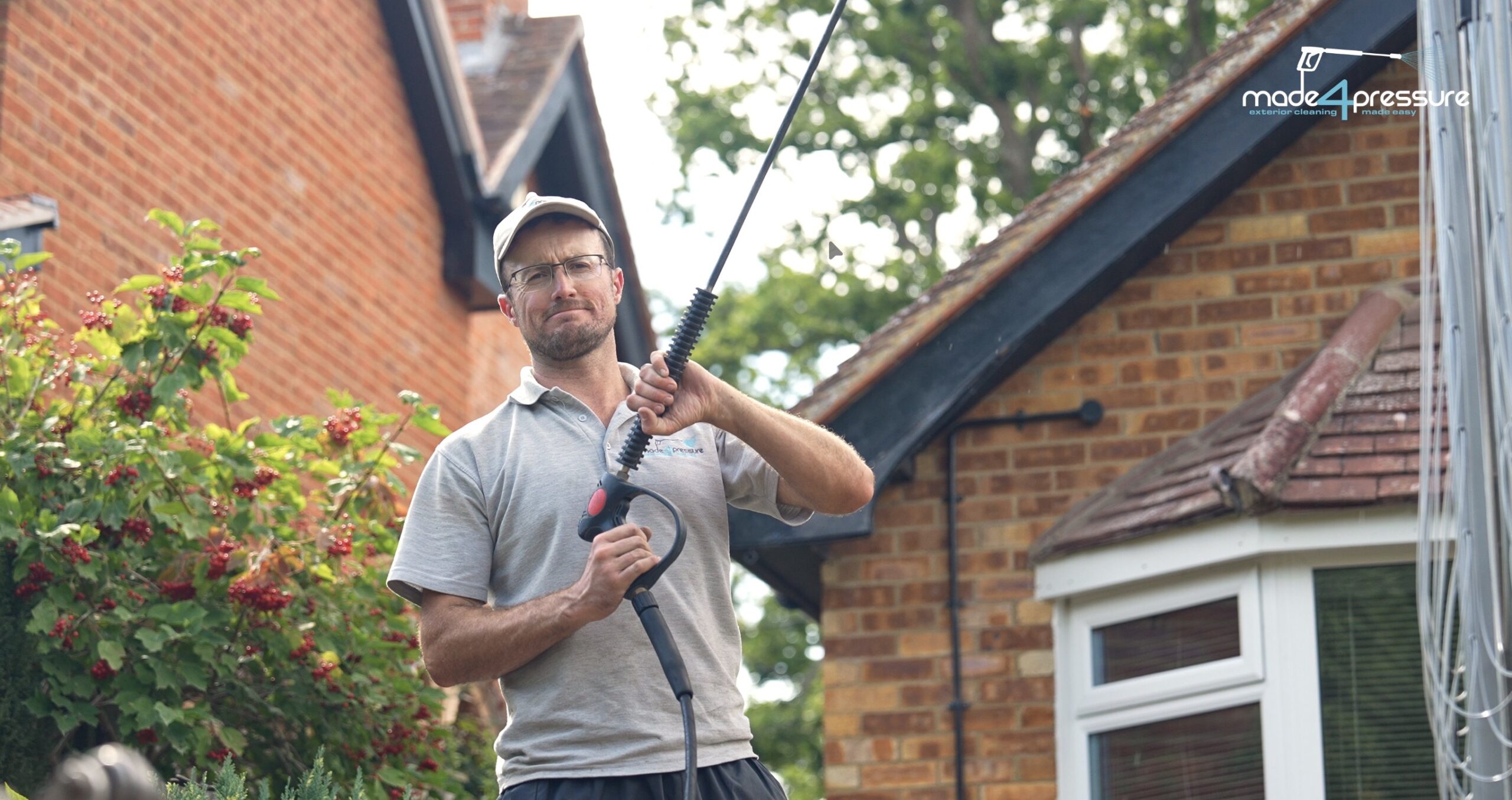

Water spilling over the edge of a gutter during heavy rain looks like a small nuisance. It rarely stays one. A gutter system exists to move rainwater away from your roof, walls and foundations, and when it leaks, that water goes exactly where it causes the most expensive damage.
The usual causes
Blockage is the most common. Leaves, moss and debris stop water reaching the downpipes, so it backs up, overflows, and puts pressure on joints until they leak. Regular gutter cleaning in Aylesbury prevents most of this before it starts.
Damage and misalignment come next. Gutters loosen over time through weather exposure and general wear. Cracks, holes and separated joints let water escape before it ever reaches the drainage system, and a gutter that has dropped out of level will pool water in one section until it finds a way out.
Sometimes the roof is the real culprit: damaged edges, missing tiles or poor water flow sending more water into the gutter than it was designed to carry.
What that leak actually costs if ignored
Water running down a wall instead of a downpipe saturates brickwork. In winter, that trapped moisture freezes, expands and cracks the brick face. Persistent overflow also leads to penetrating damp inside the house, rotted fascia boards behind the gutter, and in the worst cases, water pooling at the base of the wall and affecting foundations. The repair bills for any of these dwarf the cost of the cleaning that would have prevented them.
How professionals approach a leaking gutter
A proper fix starts with finding the actual cause rather than sealing the visible drip. That means clearing the system fully, checking falls and alignment, inspecting joints and brackets, and looking at the roofline above. Resealing a joint on a blocked, back-falling gutter is a repair that fails by the next downpour.
Professionals also work safely at height with the right access equipment, which matters more than it sounds: gutter work is one of the most common sources of ladder injuries among homeowners.
What you can do between visits
Watch for overflow during rain, damp patches on external walls, and vegetation growing from the gutter line, all early signs worth acting on. After storms, a quick look from ground level for sagging sections or visible debris takes a minute and catches problems early.
How often is often enough?
Twice-yearly cleaning, ideally late autumn after leaf fall and again in spring, suits most homes. Properties with overhanging trees may need more frequent attention; those without nearby trees can sometimes stretch to annual visits. A professional will tell you honestly which camp your house falls into after the first clean.
Made 4 Pressure provides gutter cleaning, repairs and exterior cleaning across Aylesbury and the surrounding area. If your gutters are overflowing or leaking, get in touch for a free quote.